What is a softphone? Guide for Shopify brands
A softphone is a software phone that runs on any device. Here's how Shopify brands use one to handle calls, recover carts, and tie calls to revenue.
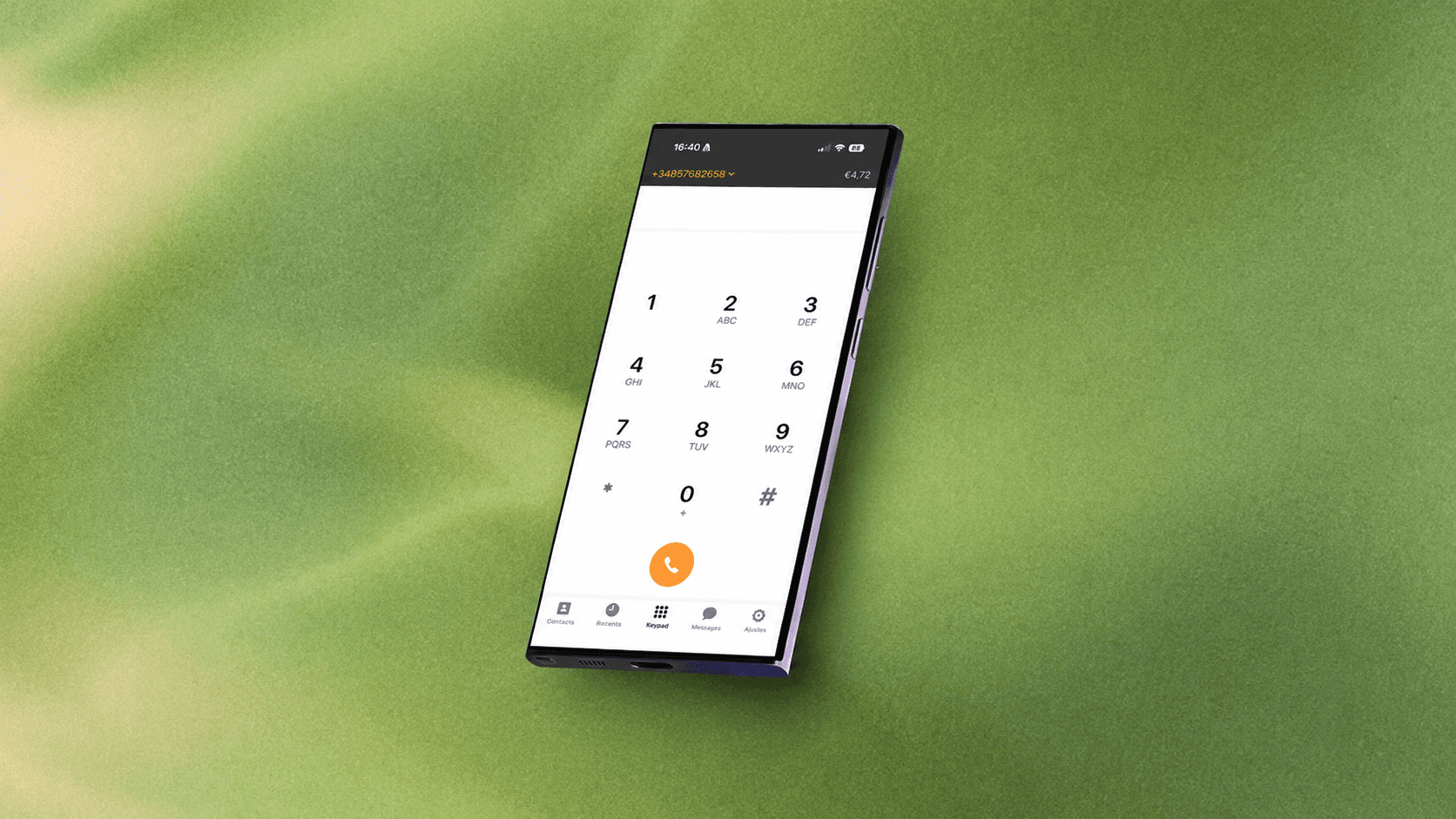
Most ecommerce founders never planned to run a phone line. Then orders scaled, "where is my order" emails piled up, and abandoned checkouts started leaking revenue that email alone could not recover, and with the average cart abandonment rate sitting at 70.2% (Baymard Institute), that leak is bigger than most founders realize. At some point, a phone number goes on the contact page, and now someone has to answer it from wherever they happen to be.
That is the problem a softphone solves. You do not need a desk, a handset, or a wire running into the wall. You need software. This guide explains what a softphone is, how it works, and what actually matters when you are choosing one for a Shopify store rather than a 500-seat call center.

What is a softphone?
A softphone is a software-based phone. It lets you make and take calls over an internet connection on a device you already own: a laptop, tablet, or phone. There is no physical handset and no dedicated hardware. The “phone” is an app.
Under the hood, a softphone uses VoIP (Voice over Internet Protocol) to turn your voice into data and send it over the internet instead of a traditional phone line. To the caller, it sounds like any other call. To you, it is a window on your screen with a dial pad, mute button, transfer, hold, and usually a lot more.
For an ecommerce brand, the important part is not that the phone lives in software. It is what the software can be connected to. A softphone that knows nothing about your store is just a dial pad. A softphone connected to Shopify can see the order the caller is asking about, look up the product they want, and follow up by SMS, all during the call.
How does a softphone work?
A softphone behaves like a normal phone in every way that matters to the person on the other end. The difference is the plumbing.
When someone calls your store, the audio travels as data packets over the internet rather than over copper wire. The softphone app on your device sends and receives that audio using your microphone and speaker, or a connected headset. Because it is software, it can do things a desk phone never could: display caller history, route calls based on rules, record and transcribe conversations, and transfer a call to another teammate with a click.
Softphones work wherever your team works. Desktop apps run on Mac, Windows, and in the browser, while mobile apps work on iOS and Android. That means a support lead can take a call at their desk in the morning, and a founder can catch the overflow from a warehouse or trade show floor in the afternoon, all using the same business number.
The newer generation of softphones adds something older systems did not have: an AI voice agent that can answer the call itself. Instead of routing every call to a human, an AI agent picks up, understands what the caller wants, and either resolves the request or escalates it. For ecommerce brands, that changes the math.
Softphone vs desk phone vs mobile: what's the difference?
It helps to see the three side by side.
Desk phone | Personal mobile | Softphone | |
|---|---|---|---|
Hardware needed | Handset, wiring, PBX | Just the phone | None, runs on existing devices |
Works remotely | No, tied to a location | Yes | Yes, anywhere with internet |
Shows business number | Yes | No, shows personal number | Yes, keeps work and personal separate |
Call recording and transcripts | Rarely | No | Yes, built in |
CRM and Shopify context | No | No | Yes, when integrated |
SMS follow-up | No | Manual | Yes, from the same tool |
Scales for busy periods | Slowly, buy hardware | No | Instantly, add lines in software |
AI agent can answer | No | No | Yes, on modern platforms |
The takeaway for a growing store: a desk phone locks you to a place, a personal mobile blurs work and life and leaks context every time a rep leaves, and a softphone gives you the flexibility of mobile with the professionalism and data of a real business system.
Why Shopify brands use a softphone
Generic softphone articles list "portability" and "privacy" as benefits. Those are real, but here is what actually moves the needle for an ecommerce operation.
You stop losing calls, and calls are high-intent. A shopper who calls is usually close to buying or close to churning. Missing that call is not a missed message, it is a missed order or a refund you could have prevented. A softphone lets anyone on the team answer from any device, and an AI voice agent can answer the ones nobody picks up, 24/7.
Every call carries Shopify context. When the softphone is connected to your store, whoever answers, human or AI, already knows who is calling, what they ordered, and where the package is. No "let me look that up," no putting the customer on hold to open another tab.
Calls turn into revenue you can measure. A softphone built for ecommerce ties each call to an order, so you can finally see that phone support and phone outreach drive sales, not just deflect tickets. That is the number a founder actually cares about.
One business number, no personal phones. Your team answers on a work identity from their own devices. When someone leaves, the number, the history, and the contacts stay with the business.
It scales with your season. Black Friday does not require buying hardware. You add capacity in software, or let the AI agent absorb the spike.
Must-have softphone features for an ecommerce store
When you are comparing softphones as a Shopify brand, the standard checklist (hold, transfer, voicemail, multiple lines) is table stakes. Assume every serious provider has those. The features that separate a generic business phone from an ecommerce phone platform are these.
Shopify integration, not just a CRM connector. The softphone should read order status, product details, and customer history from Shopify directly, and write back, for example by creating a draft order during a call.
An AI voice agent. A 24/7 AI Voice Agent that handles inbound calls, understands Shopify order and product context, answers customer questions, sends SMS links, and can create draft orders during the call. This is the single biggest upgrade over a legacy softphone, because it means calls get answered even when your team is asleep or slammed.
SMS from the same place. Most order questions end with "I'll text you the link." The softphone should send that tracking link, reorder link, or checkout link as an SMS follow-up without switching tools.
Call summaries and transcripts. Automatic summaries mean nobody rewrites notes after every call, and your team can see what happened without listening to a recording.

Outbound campaign dialing. For proactive revenue, an ecommerce softphone should power outbound campaigns: abandoned checkout recovery, VIP outreach, and win-back, not just inbound support.
Revenue attribution. The system should tie calls to orders so you can report on phone-driven revenue, not just call volume.
How to choose the right softphone for your Shopify store
Work through these in order and you will avoid the common mistake of buying a call-center tool built for a different kind of company.
First, decide what job the phone is doing. Pure support? Then AI answering, Shopify context, and call summaries matter most. Sales and recovery too? Then you also need outbound dialing and campaign tools. Most growing brands need both.
Second, confirm the Shopify connection is real. Ask whether it reads live order and product data and whether it can create a draft order during a call. A phone system that only syncs a contact list is not ecommerce-native.
Third, check whether it can answer calls without a human. If your volume is spiky or you are a lean team, an AI voice agent is the difference between capturing after-hours demand and sending it to voicemail.
Fourth, look at how it follows up. SMS, order links, and summaries should be built in, not bolted on.
Fifth, match the pricing to how you actually use the phone. If call volume is uneven month to month, usage-based pricing protects you from paying per seat for lines that sit idle in the slow season.
Finally, make sure it works on the devices your team already uses, desktop and mobile, so nobody is chained to a desk.
Where Consio fits
Consio is an AI phone platform built specifically for Shopify and ecommerce brands, which is a different starting point from general business softphones. Its 24/7 AI Voice Agent handles inbound calls, understands Shopify order and product context, answers customer questions, sends SMS links, and can create draft orders during the call. On the outbound side, the Ecom Power Dialer runs campaigns for abandoned checkout recovery, VIP outreach, and win-back. Every call is summarized, follow-ups go out by SMS, and calls are attributed back to Shopify orders so you can see the revenue the phone actually drives.
Pricing is usage-based and starts free: $30 per 100 minutes or $60 per 400 minutes, with roughly $0.10 per minute overage. All features are included rather than gated behind tiers. For a store with uneven call volume, you pay for what you use instead of per seat.
FAQs
What is a softphone in simple terms?
A softphone is a phone that runs as software on a device you already own, like a laptop or mobile, instead of as a physical desk phone. It makes and receives calls over the internet using VoIP. For an ecommerce brand, the value comes from connecting it to your store so calls carry order and product context.
Do I need special hardware to use a softphone?
No. That is the point of a softphone. You install an app on a computer or mobile device with an internet connection and you are ready to make and take calls. A headset is optional for comfort, but not required. There is no PBX box, no wiring, and no dedicated handset to buy.
Is a softphone good for a small Shopify store?
Yes, and often better than a desk phone or using personal mobiles. A softphone gives a small team a shared business number, keeps work and personal calls separate, and scales instantly for busy periods like a product launch or Black Friday. With an AI voice agent, even a one-person store can answer calls 24/7 without hiring.
How is an AI softphone different from a regular softphone?
A regular softphone still needs a human to pick up. An AI softphone, or AI phone platform, can answer the call itself: it understands what the caller wants, pulls order and product details, answers the question, and sends an SMS follow-up, all without a person. It handles after-hours and overflow calls that would otherwise go to voicemail.
Can a softphone connect to Shopify?
A general business softphone usually connects only to a CRM or a contact list. An ecommerce-native platform like Consio connects to Shopify directly, so it can read live order status and product information and even create a draft order during a call. That live store context is what turns a phone line into a sales and support channel.
How much does a softphone cost for an ecommerce brand?
It varies by provider. Traditional business phone systems charge per user per month, which adds up as you add seats. Consio uses usage-based pricing instead: it is free to start, then $30 per 100 minutes or $60 per 400 minutes, with about $0.10 per minute overage and all features included. That suits stores with uneven call volume.
Does a softphone only handle voice calls?
No. Modern softphones handle far more than voice. Depending on the platform you also get SMS, call recording, transcripts, automatic call summaries, click-to-dial, and outbound campaign tools. An ecommerce platform adds abandoned checkout recovery, VIP outreach, and revenue attribution on top.
See how Consio helps Shopify brands turn calls into revenue. Book a demo

Content Marketing