Best ways to improve customer satisfaction for Shopify Brands
Learn how Shopify brands can improve customer satisfaction with better feedback, faster support, phone conversations, and customer experience workflows.

Customer satisfaction is one of the most important growth levers for Shopify brands.
Most ecommerce teams already track revenue, conversion rate, traffic, average order value, and repeat purchase rate. But customer satisfaction often gets treated as a support metric instead of a business metric. That is a mistake.
For Shopify brands, customer satisfaction impacts everything: repeat purchases, reviews, referrals, retention, support costs, and even conversion. A customer who gets a fast, helpful answer is more likely to buy. A customer who has a smooth post-purchase experience is more likely to come back. A customer who feels heard is more likely to trust the brand again.
The challenge is that customer expectations are higher than ever. Shoppers want quick answers, clear communication, easy returns, fast issue resolution, and personalized support. They do not want to wait hours for a response, repeat their order number three times, or dig through a help center when they have a simple question.
The best Shopify brands are improving customer satisfaction by combining two things:
Better customer feedback
Faster customer conversations
Why customer satisfaction matters for Shopify brands
Customer satisfaction is not just about making customers “happy.” It is about reducing friction across the entire customer journey.
For Shopify brands, friction typically happens at four key points:
Before purchase, when a shopper has a question about sizing, delivery, returns, product details, subscriptions, or compatibility.
During checkout, when a shopper hesitates and abandons their cart.
After purchase, when a customer wants tracking updates, order changes, return information, or help with an issue.
After support, when the brand needs to understand whether the experience was actually good.
Every one of these moments can either strengthen trust or damage it.
A slow answer can cost a sale. A poor support experience can turn into a bad review. A missed call can become a missed order. A frustrated customer can become a churned customer.
On the other hand, fast and helpful support can become a competitive advantage.
Collect customer feedback consistently
The first step to improving customer satisfaction is knowing where customers are satisfied and where they are frustrated.
Many Shopify brands rely on anecdotal feedback from support tickets, reviews, or social comments. That is useful, but it is not enough. Brands need a consistent way to measure customer sentiment across support interactions and customer journeys.
This is where customer feedback surveys become important.
With a tool like Simplesat, brands can collect CSAT, NPS, CES, or rating-based feedback after customer interactions. Simplesat plugs directly into tools like Gorgias, so feedback lands next to the ticket, and the team can act on it without leaving their helpdesk.
For example, a Shopify brand can ask:
Was this support experience helpful?
How satisfied are you with your recent interaction?
How easy was it to get your issue resolved?
How likely are you to recommend our brand?
These questions help turn customer satisfaction into something the team can track, analyze, and improve over time.
The goal is not just to collect more feedback. The goal is to find patterns. Look at feedback by issue type, by agent, and by team. When the same problem keeps coming up (order tracking, returns, damaged items), the fix belongs in the workflow, not the ticket.
If customers are consistently leaving low scores after return requests, the return process may need to be simplified. If customers are frustrated after delivery questions, the brand may need better shipping communication. If customers are happy after live conversations, the brand may want to make that channel more visible.
Customer feedback gives Shopify brands the signal they need to improve the experience.
Use CSAT to identify support gaps
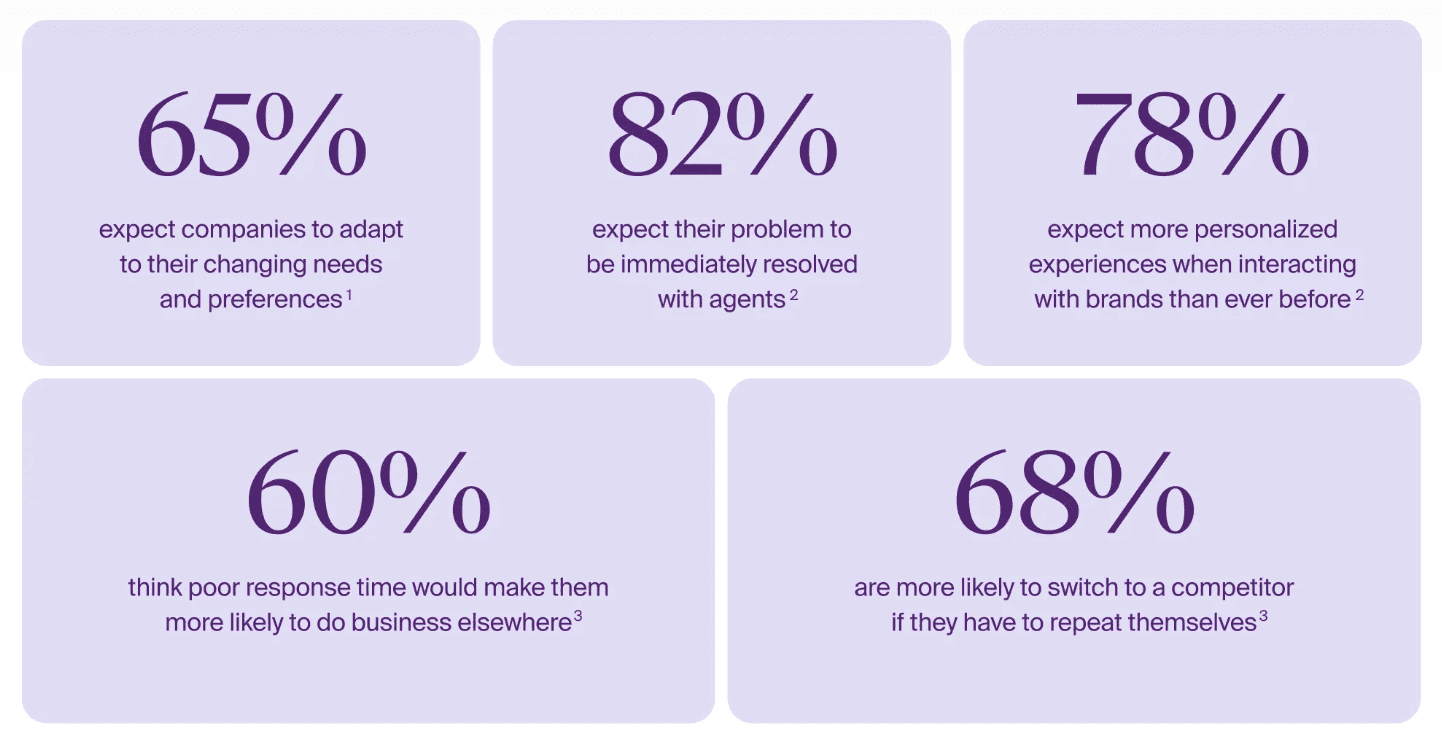
CSAT is especially useful for Shopify support teams because it measures satisfaction after a specific interaction. That makes it actionable.
A low CSAT score after a ticket, phone call, or chat can point to a specific issue. Maybe the response was too slow. Maybe the customer did not get a clear answer. Maybe the agent did not have enough order context. Maybe the customer had to repeat information that should have been available already.
For Shopify brands, the most valuable CSAT insights often come from support themes such as:
Where is my order?
How do I return this?
Can I change or cancel my order?
Which product should I choose?
When will this item be back in stock?
Can I apply a discount?
Can I speak with someone?
Once these patterns are visible, the brand can improve the workflow.
Some issues can be solved with better automation. Some need clearer help center content. Some require faster human follow-up. Some are better handled by phone because the customer needs reassurance before buying.
CSAT helps brands understand what is working and what needs to change.
Make support faster, not just more automated
Automation can improve customer satisfaction, but only when it helps customers get answers faster.
Bad automation creates frustration. Good automation removes unnecessary waiting.
For Shopify brands, the best approach is not to automate everything. It is to automate the questions that are repetitive, simple, and high-volume, while routing more complex or high-intent conversations to the right person.
For example, an AI voice agent can help answer common inbound questions such as:
Shipping updates
Store hours
Product availability
Commerce FAQs
This can reduce missed calls and give customers immediate answers, even outside business hours.
But when a shopper has a high-intent question, like choosing the right product, completing a large order, or resolving a complex issue, the brand may want a human to step in.
That is where phone support becomes valuable.
A live conversation can resolve uncertainty faster than a long email thread. It also creates a more personal experience, especially for high-value customers or shoppers who are close to purchasing.
The key is to use automation and human support together.
Offer phone support for high-intent moments
Many Shopify brands underestimate the phone as a customer experience channel.
But phone conversations are often the fastest way to resolve hesitation.
This is especially true for products that involve higher consideration, personal preference, sizing, subscriptions, delivery complexity, customization, or gifting.
A shopper may not want to wait for an email response when they are ready to buy. They may just need a quick answer before checking out.
For example:
“Will this arrive before Friday?”
“Is this the right size?”
“Can I change my order?”
“Is this compatible with what I already have?”
“Can I return it if it does not fit?”
“Can I speak with someone before placing the order?”
These questions are not just support questions. They are conversion blockers.
If the brand answers quickly, the shopper may buy. If the brand misses the moment, the shopper may abandon.
With Consio, Shopify brands can use phone support, AI voice agents, outbound calling, and SMS follow-ups to create faster customer conversations. Instead of letting high-intent customers wait, brands can answer questions, route calls, follow up, and connect conversations back to Shopify context.
That helps improve both customer satisfaction and revenue outcomes.
Connect feedback with action
Collecting feedback is only useful if the brand acts on it.
The best Shopify brands create a simple loop: collect feedback, identify friction, improve the workflow, and measure again.
If CSAT drops after return requests, review the return process. If customers complain about slow responses, improve staffing, automation, or routing. If customers mention confusion around delivery, update shipping communication. If phone conversations receive strong feedback, make phone support more visible on key pages.
Customer satisfaction should not stay as a dashboard metric. It should guide how the brand improves the customer experience.
Customer satisfaction is a growth system
Improving customer satisfaction for Shopify brands does not require one big change. It requires building better systems around the moments that matter most.
Simplesat helps brands collect and understand customer feedback. Consio helps Shopify brands turn phone conversations into faster support, better customer experiences, and more measurable outcomes.
Together, feedback and conversation create a stronger customer experience loop. You listen to customers, understand what needs to improve, resolve issues faster, and create the kind of experience that makes customers more likely to buy again.

Content Marketing